
Electrical behavior in a transparent antistatic coating is not determined by the conductive ingredient’s name alone. Resin, additives, drying history and moisture condition need to be considered together. For electronic packaging, transparent covers and functional films, development should prioritize reproducible electrical and optical behavior across environmental changes rather than a single minimum resistance.
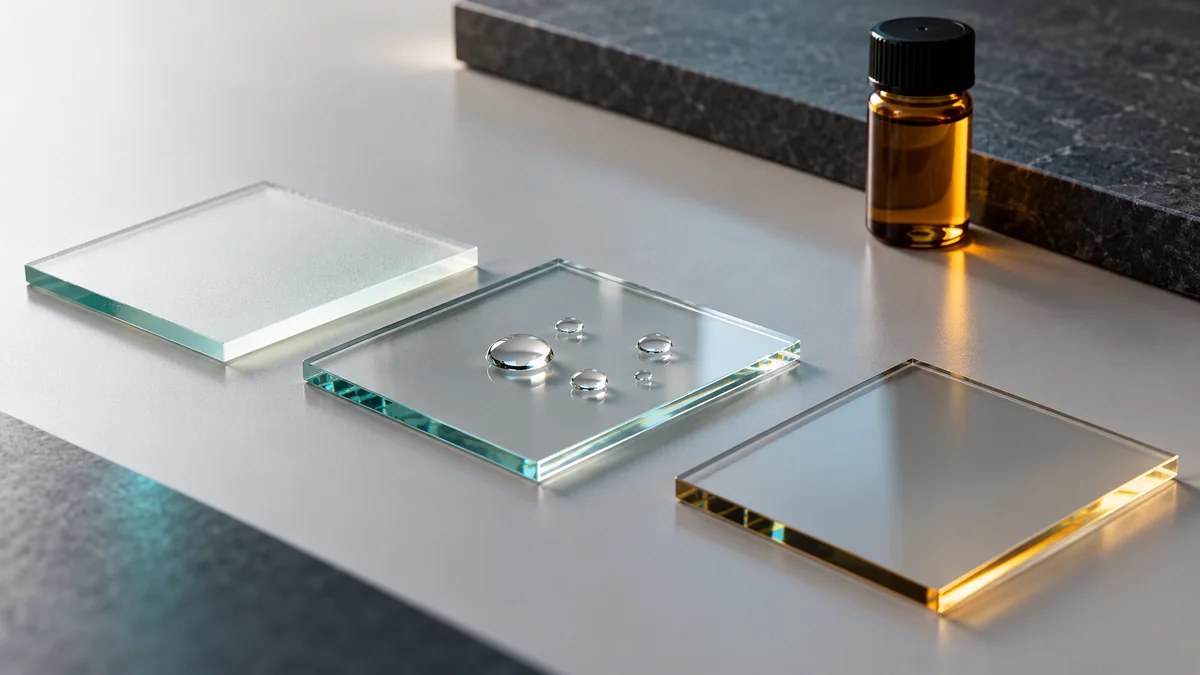
Research perspective: humidity affects electrical and optical response
A 2017 study reported by Oak Ridge National Laboratory related water adsorption in PEDOT:PSS films to electrical, optical and structural changes.[1] It establishes humidity as an important measurement condition, not a common response magnitude for all commercial formulations. For custom coatings, the study identifies variables to investigate; results still depend on the complete formulation and film formation.
Establish repeatable conditioning and measurement
A specimen immediately after drying may differ from one stored in room conditions. Comparisons need thickness, conditioning duration, temperature, humidity and location, with consistent electrodes and settings. Where readings are still changing, preserve the time trend rather than choosing one value. Low-humidity applications need evaluation in the agreed environment, not substitution with room-condition data.
Compatibility between the functional and resin phases
The conductive phase needs effective connections within the film, while the resin supports film formation and the interface. Their proportions can affect dispersion, drying shrinkage and local coverage. Holding substrate and dry-film thickness fixed while comparing resin revisions helps separate material effects from application effects. If several variables change together, an improved reading may reflect thickness rather than a better material structure.
Use cycling to examine recovery
Humidity cycling compares behavior before exposure, during exposure and after return to the original conditions. Distinguish reversible response from persistent drift, then relate it to appearance, adhesion and local defects. Comparing the best state of different specimens can hide history effects. Consistent revisions and exposure order make the electrical response useful for formulation decisions.
Balance water resistance, conduction and application
Adding resin protection or modifying the functional phase can also affect transparency, network continuity and application behavior. Water-resistant appearance alone does not establish retained antistatic function, and acceptable resistance does not resolve interface problems. Compare optical, electrical and post-cleaning behavior together, then confirm that the intended coating equipment can reproduce the film.
Selection returns to the functional surface
Custom development can begin with the substrate, transparency, electrical target and available drying conditions. Flat specimens compare materials; actual parts establish coverage at edges, curves and contact faces. Semiconductor-related use also requires connection to the end user’s grounding, charging-control and cleanliness requirements. A transparent conductive component is not a complete ESD control system.
Development and acceptance criteria
| Evaluation area | Evidence to retain |
|---|---|
| Conditioning record | Trace drying completion, environmental changes and measurement time. |
| Cycle comparison | Compare initial, exposed and recovered states of the same revision. |
| Function retention | Review resistance, optics, adhesion and post-cleaning results together. |
For transparent antistatic material selection, share the substrate, humidity cycles and electrical acceptance criteria. Our team will confirm the material direction, sample conditions and applicable technical documents.
Technical enquiry →