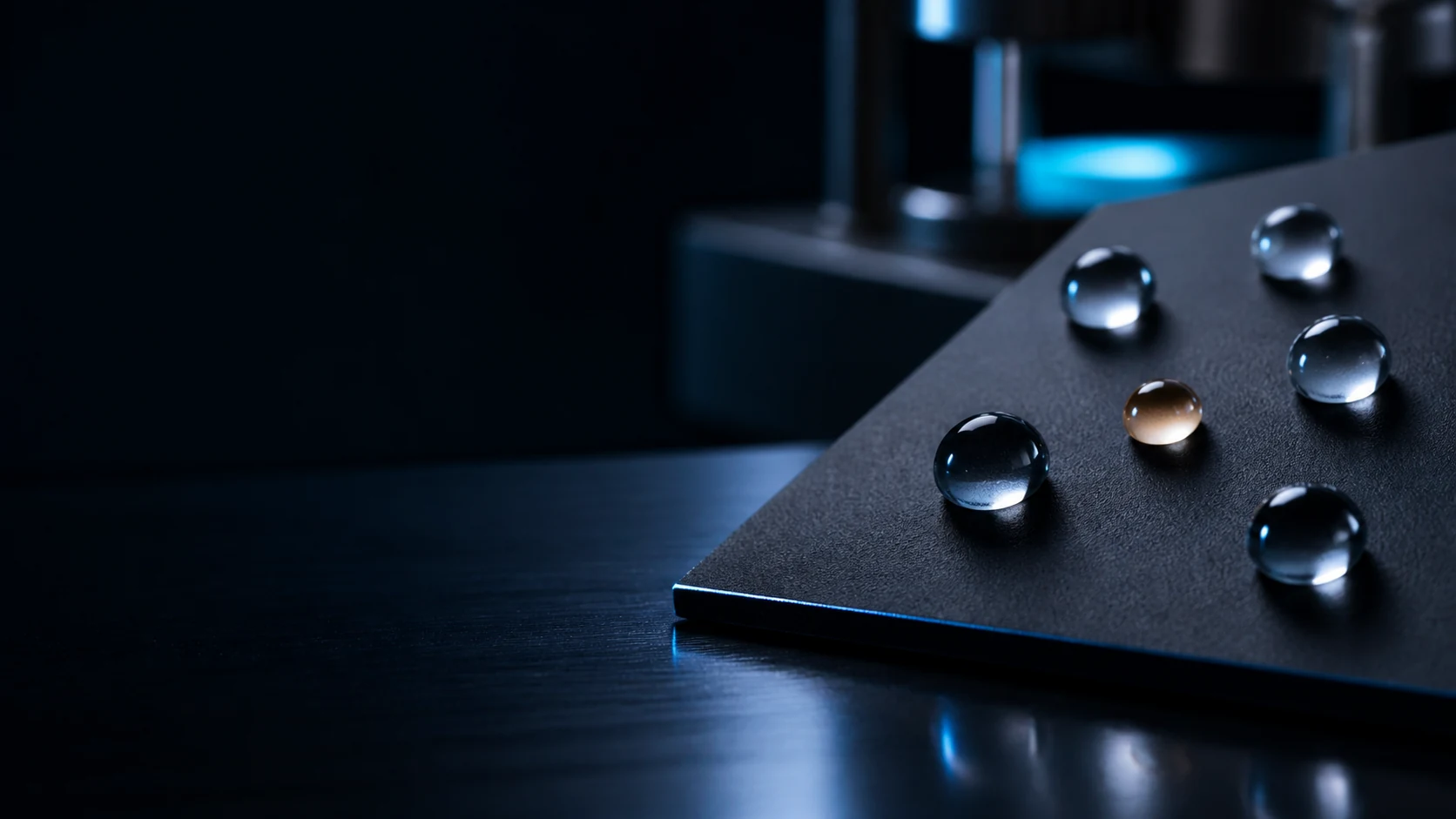
Hydrophobic behavior
Reduce water wetting and support easier removal of water-borne residues.
Control contamination and cleaning behavior without losing sight of appearance, adhesion and process compatibility.
The best direction depends on the contaminant, cleaning method, substrate and expected service life.
Reduce water wetting and support easier removal of water-borne residues.
Address oils, fingerprints and appearance on touched or visible parts.
Evaluate alternative chemistries against the required function, durability and supply-chain documentation.
A reliable discussion connects surface energy with the component and its operating conditions.
Transparency, haze, gloss, color and texture where relevant.
Cleaning, abrasion, humidity, chemical exposure and other agreed conditions.
Version-specific TDS, SDS and controlled-substance information for the intended market.
The material direction is selected from the dominant contaminant, appearance target and cleaning route.
Balance easy-clean behavior with transmission, haze, color and any existing optical surface.
Address fingerprints, oils, feel and repeated wiping without losing the approved appearance.
Match water, oil, chemicals and maintenance exposure to the substrate and coating process.
Contact angle is only one result; substrate preparation, application, cure and reliability determine whether the function can be introduced.
Clarify water, oil, fingerprint, cleaner or mixed exposure and the acceptable residual appearance.
Evaluate wetting, film formation, adhesion and appearance on the real substrate and existing process.
Measure contact angle, cleanability, abrasion, chemical or environmental exposure and appearance against agreed criteria.
Share the substrate, contaminant, appearance target and cleaning method so we can discuss the appropriate hydrophobic, oleophobic or fluorine-free direction.