
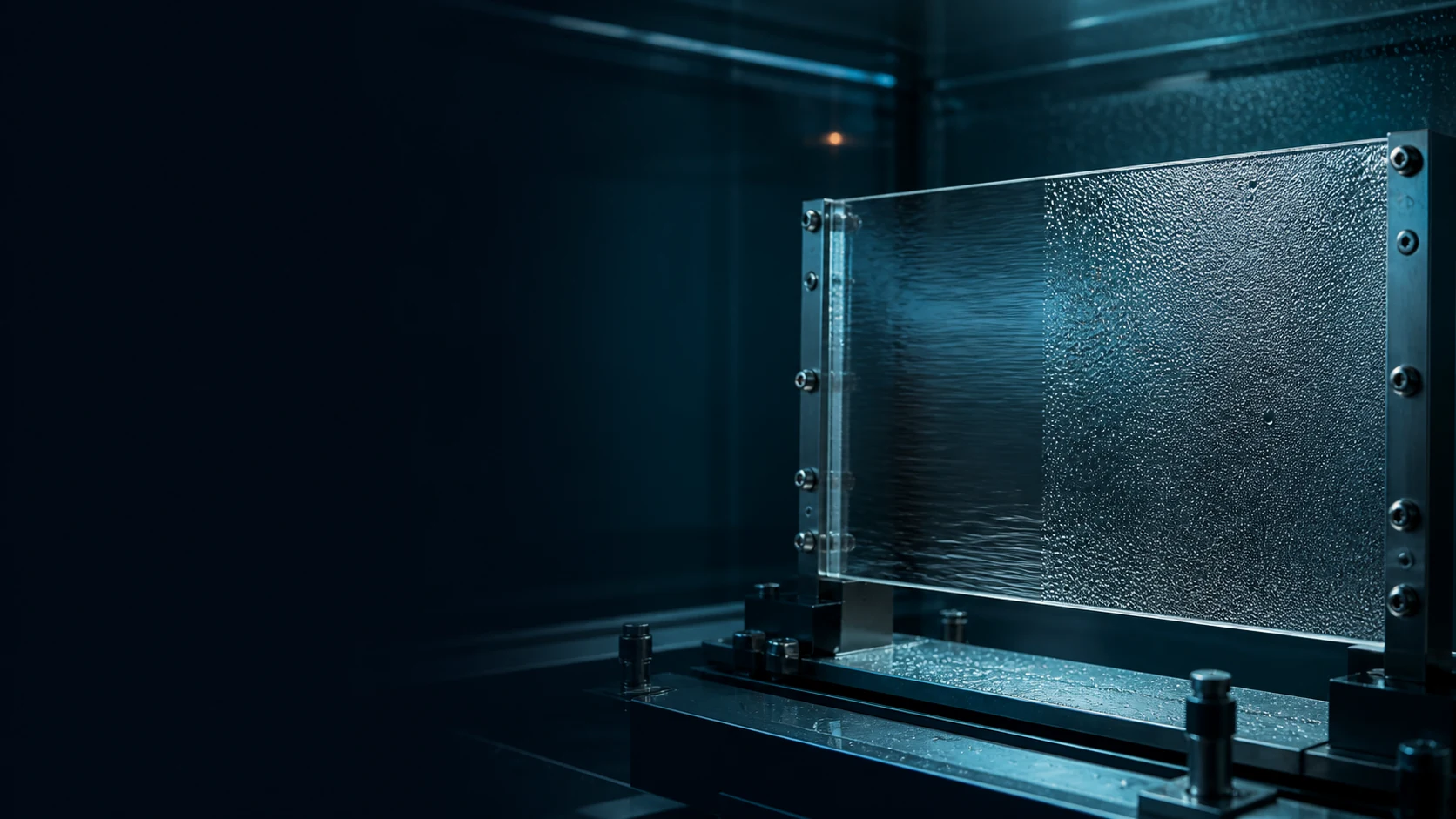
Anti-Fog Design for Automotive Lamps and Instrument Windows
Fogging inside a lamp or instrument is a water-vapor system problem involving temperature, ventilation, assembly moisture and the transparent surface.
Condensation belongs to the complete component
Local temperature gradients, heat-source location, air movement and trapped moisture determine where condensation forms and how long it remains. The same coating can face a very different water load in another lamp or instrument construction.
Optical appearance may be harder than initial defogging
A coating must remain clear and uniform under lighting while avoiding haze, color shift, flow marks, particles and edge build, even when its initial anti-fog response is acceptable.
Material and manufacturing conditions are coupled
Curves, ribs and complex boundaries change film build, while substrate chemistry, pretreatment, coating access and cure influence adhesion and clarity. Final selection should therefore return to the actual part and process.
Our scope is transparent-surface material integration
Organic Advanced Materials can support hydrophilic anti-fog material selection and application discussion around the substrate, appearance and existing coating conditions. Lamp construction, ventilation and vehicle-level validation remain shared responsibilities of the relevant design and manufacturing teams.
References
- Experimental Study on Water Condensation in Automotive HeadlampSAE Technical Paper 2010-01-1326 · DOI 10.4271/2010-01-1326
- Automotive LED Headlamp Defogging: Experimental and Numerical InvestigationSAE Technical Paper 2016-01-0216 · DOI 10.4271/2016-01-0216