
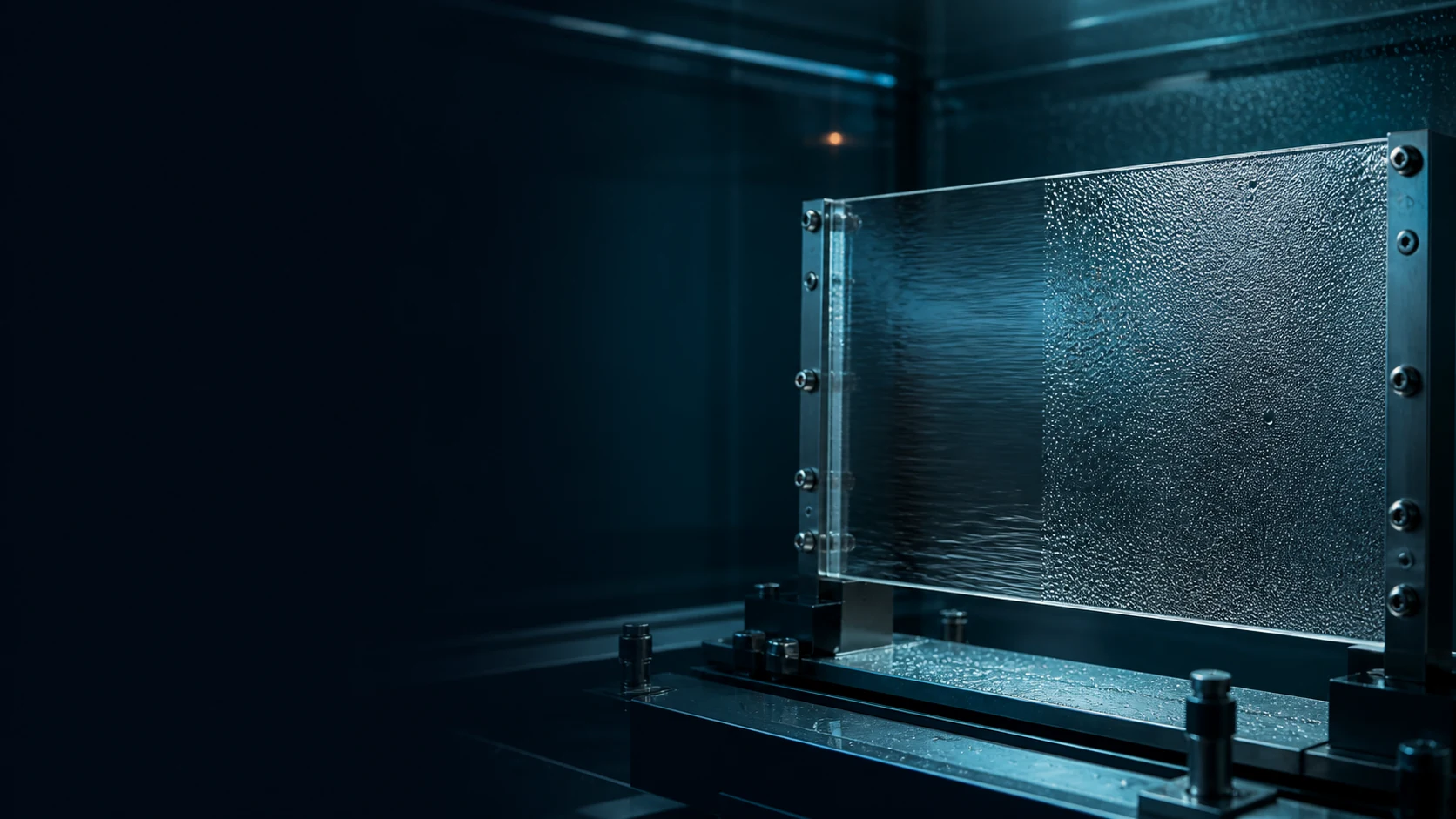
Why Mirrors Fog and How Different Controls Work
Fogging begins when a surface falls below the local dew point. The appropriate response depends on how much water condenses and how long the condition persists.
Light and sustained condensation are different
A short steam event may produce only a thin film, while sustained condensation can cause water accumulation, flow and saturation. Initial clarity alone does not represent the full service period.
Hydrophilic, absorbing and hybrid films serve different roles
Hydrophilic surfaces spread water, absorbing films provide temporary capacity, and hybrid systems balance both behaviors. Each mechanism differs in initial appearance, duration and recovery after drying.
Heating and ventilation address the system
Raising surface temperature, reducing humidity or improving airflow lowers the condensation load before it reaches the coating. Product design may use a system measure, a surface treatment or both.
Transparent surfaces must also fit daily maintenance
Organic Advanced Materials can discuss hydrophilic anti-fog directions around glass or transparent plastic, the condensation scenario and cleaning method. Final selection must also preserve appearance, adhesion and established maintenance practices.
References
- Vapor Deposition of Transparent Antifogging Polymeric NanocoatingsLangmuir, 2021 · DOI 10.1021/acs.langmuir.0c03437
- Fabrication of Transparent Silica/PEG Smooth Thin Coatings on Polymeric Films for Antifogging ApplicationsACS Omega, 2022 · DOI 10.1021/acsomega.1c07293