Fewer coating steps
A separate primer application and its associated drying or curing step are eliminated.
 SHIELD Advanced Coatings
TRANSPARENT ANTISTATIC COATINGS
Materials synthesis tailored to your target surface resistance.
SHIELD combines resin synthesis and coating formulation to develop PC and PMMA coatings around the customer's target surface-resistance range. A single functional layer bonds directly to the substrate, integrating electrical performance with high optical clarity and adhesion.
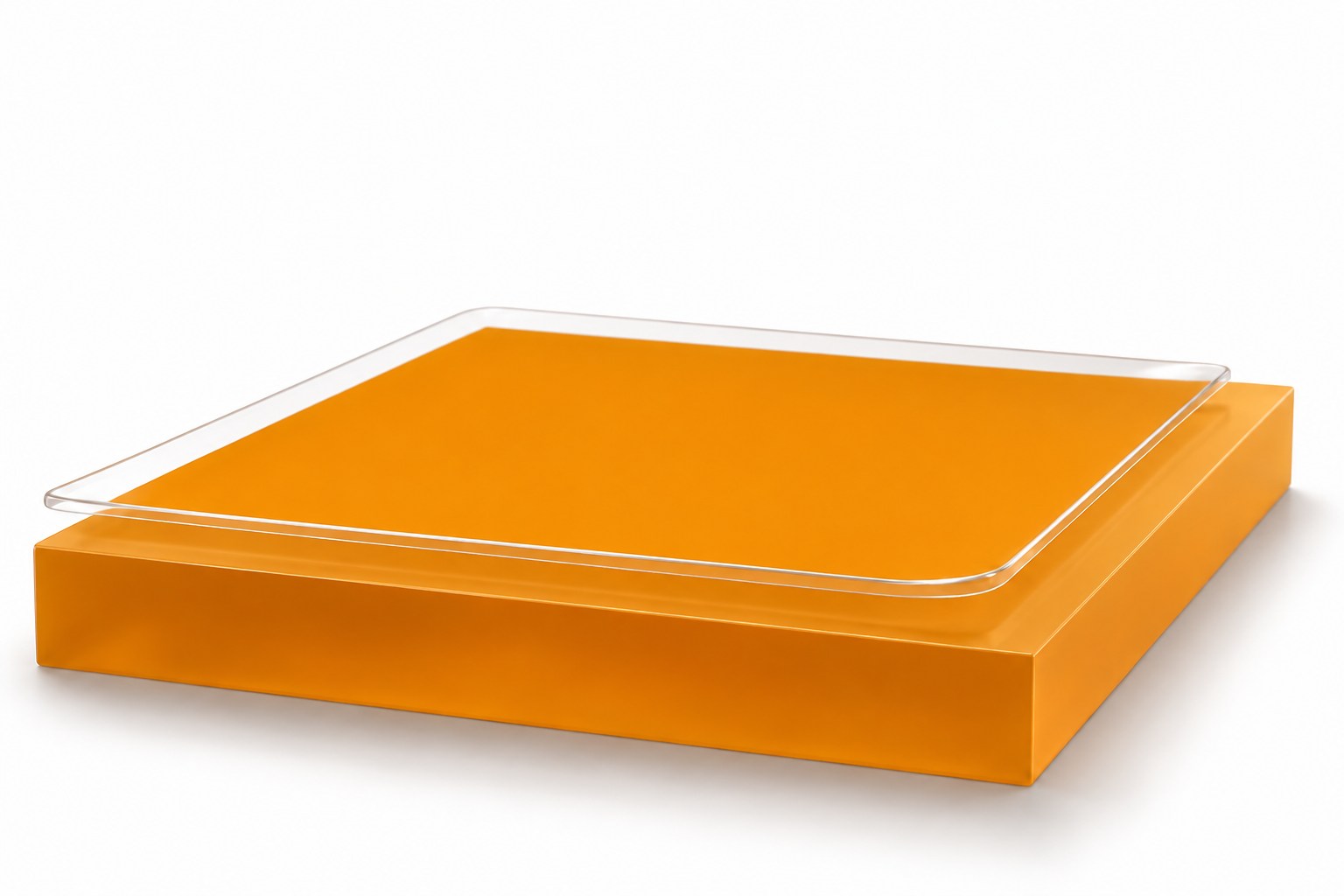
Antistatic functionality and adhesion in one clear coating.
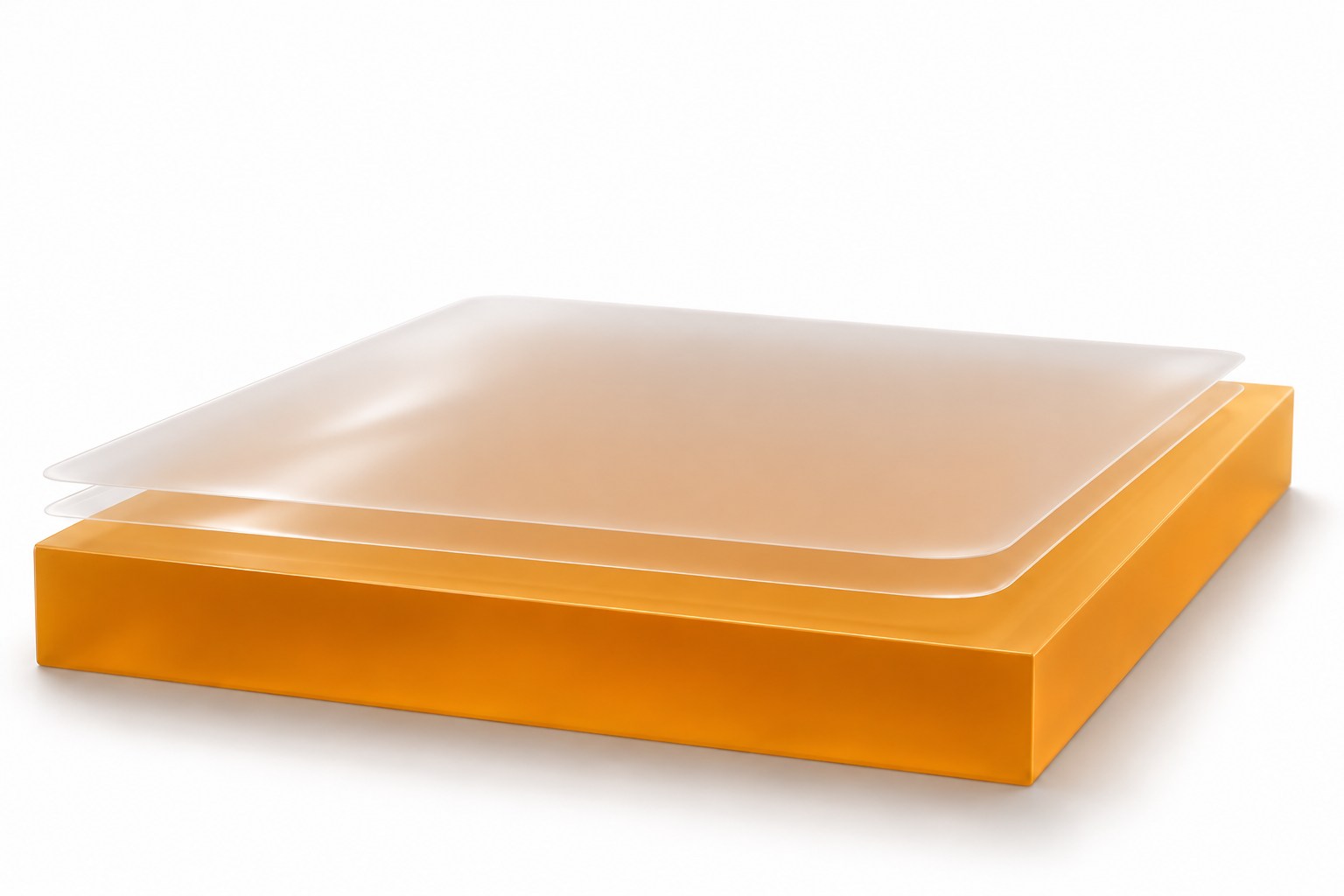
A separate primer provides the substrate-adhesion layer.
Exploded view of the coating and substrateFilm thickness and layer spacing are exaggerated to illustrate the structure. In the finished system, the layers are bonded in sequence on the substrate.Color and haze differences are illustrative. Actual optical performance is established by sample testing.
PROCESS INTEGRATION
For PC and PMMA antistatic coating processes that require an adhesion primer, the single-coat approach forms the functional layer directly on the substrate, reducing application steps and intercoat process controls.
A separate primer application and its associated drying or curing step are eliminated.
Substrate adhesion and antistatic functionality are combined in one coating, reducing the need to match a separate primer to a topcoat.
A process window is established around the single-coat formulation, film thickness, and curing conditions to support consistent sample evaluation and implementation.
OPTICAL PERFORMANCE
Equipment windows and transparent covers require clear visibility. A single-coat design integrates antistatic performance, adhesion, and optical clarity in one material system, reducing the optical matching requirements introduced by a separate primer layer.
Refractive-index mismatch between the primer, antistatic topcoat, and PC or PMMA substrate may increase interfacial reflection and affect light transmission. Microscopic inhomogeneities, roughness, or defects in the coating or at its interfaces may also increase scattering, raising haze and reducing visual clarity.
SHIELD's single-coat antistatic technology integrates electrical functionality and adhesion in one layer. Resin compatibility, dispersion, and film formation are developed together to combine high optical clarity with stable antistatic performance for transparent plastic components requiring clear visibility.
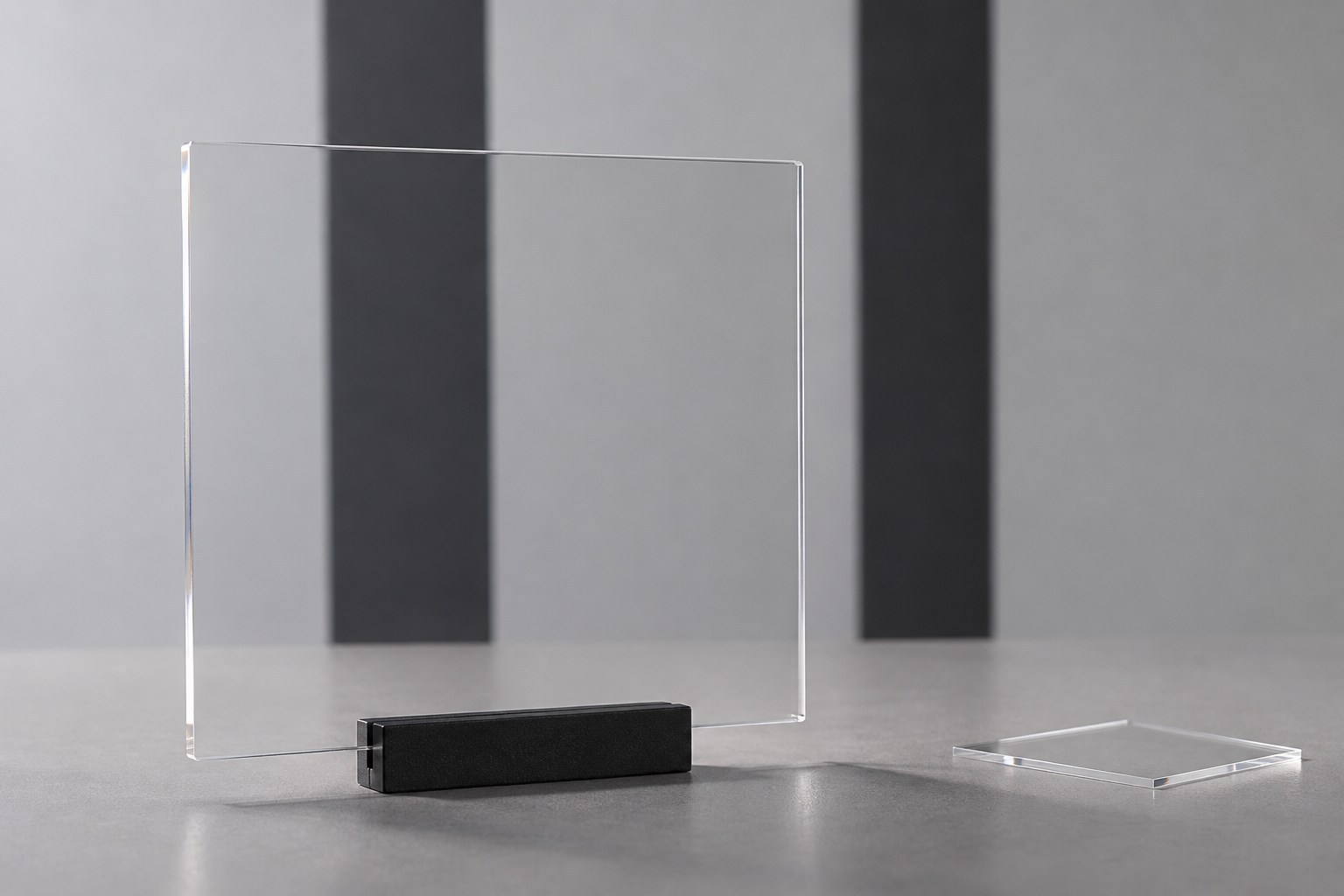
Light transmission is considered during formulation and film design, with fewer intercoat matching requirements from a separate primer.
Material uniformity and film quality are addressed to support clear visibility and a transparent appearance.
Adhesion, antistatic functionality, and optical clarity are combined in one coating to meet component requirements.
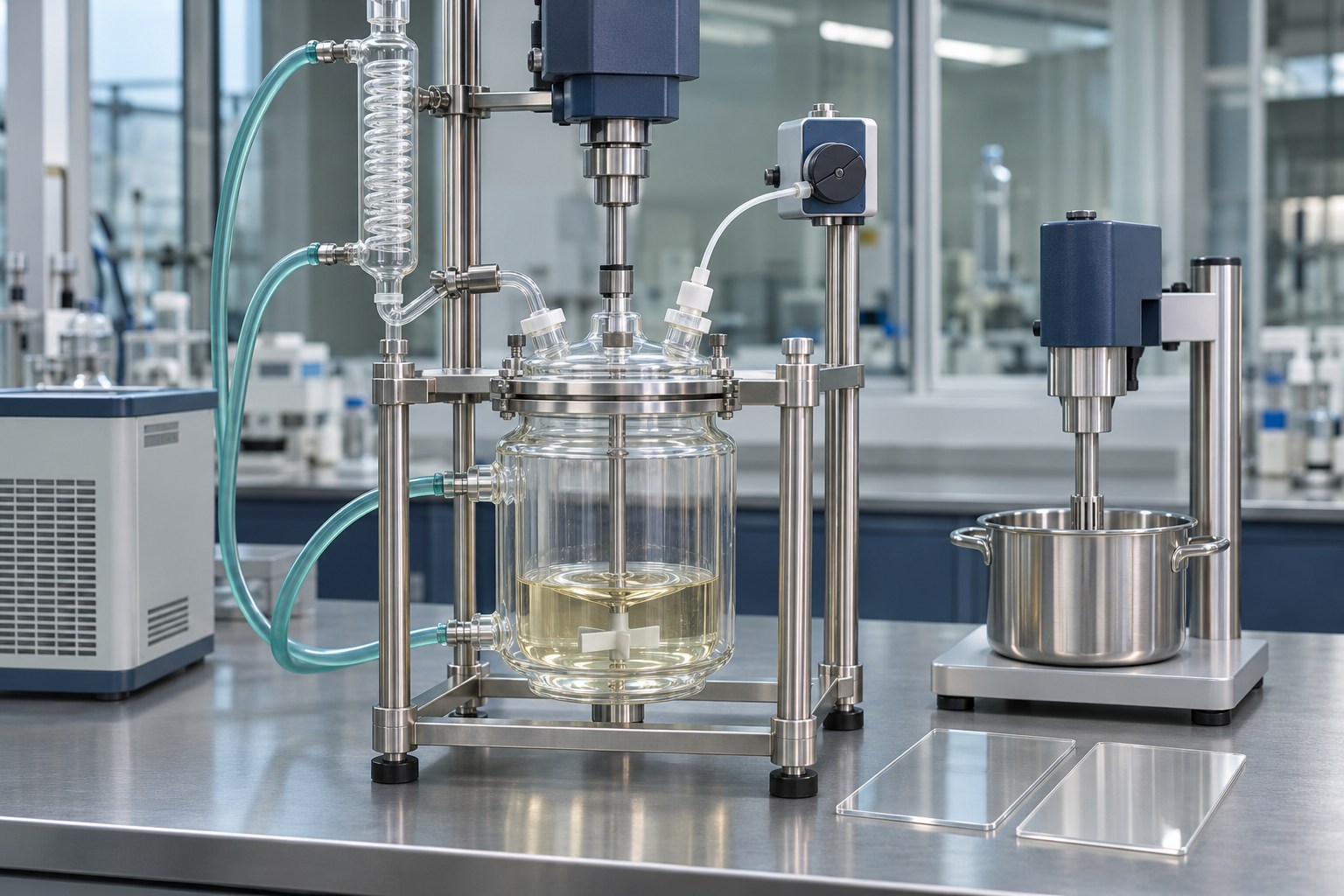
RESIN & FORMULATION DEVELOPMENT
SHIELD combines a resin synthesis department with coating formulation expertise to develop materials around the customer's target antistatic surface-resistance range. Resin structure, functional components and film formation are developed together, alongside PC and PMMA compatibility, adhesion and optical requirements.
Film-forming resin and substrate compatibility guide the evaluation of wetting, adhesion, solvent compatibility, and curing constraints.
Resin synthesis and functional formulation are developed around the intended use and resistance range, with film thickness, optical clarity and application conditions evaluated together.
Samples are prepared using the actual substrate grade and coating process. Surface resistance is verified at agreed film thickness, temperature, humidity and measurement conditions, alongside adhesion and optical quality.
SUBSTRATE COMPATIBILITY
Material compatibility is evaluated for transparent windows, equipment covers, and plastic components, considering the resin grade, appearance requirements, and coating process.
POLYCARBONATE
For PC components requiring an antistatic surface, single-coat compatibility is evaluated using the actual resin grade, molded condition, and application process, with adhesion and electrical requirements considered together.
POLYMETHYL METHACRYLATE
For transparent PMMA sheets and molded parts, material development considers substrate compatibility, optical appearance, and single-coat adhesion alongside the component's antistatic specification.
PERFORMANCE VALIDATION
Electrical and adhesion test data can be provided for the project. Substrate details, film thickness, curing conditions, and measurement conditions are recorded together to support material selection and process implementation.
| Test parameter | Evaluation scope | Recorded conditions and results |
|---|---|---|
| Antistatic electrical performanceSURFACE RESISTANCE | Evaluate the target surface resistance, uniformity across measurement locations, and electrical performance after specified conditioning. | Test method, electrodes, voltage, temperature, relative humidity, conditioning time, and individual measurement results |
| Substrate adhesionCOATING ADHESION | Evaluate coating adhesion using an agreed cross-cut/tape method or another suitable procedure. | Substrate grade, film thickness, curing conditions, test method, and coating condition |
| Light transmittance, haze, and clarityOPTICAL CLARITY | Compare light transmittance, haze, and visual clarity before and after coating, using the same substrate and thickness conditions. | Substrate thickness, dry-film thickness, measurement method, and optical results before and after coating |
| In-use durability evaluationIN-USE DURABILITY | Retest electrical performance and adhesion after wiping, cleaning, or environmental exposure defined for the intended use. | Exposure conditions, cycles or duration, retest results, and acceptance requirements |
Material specifications are established using the actual PC or PMMA samples, coating process, and mutually agreed test conditions.
PROJECT CONSULTATION
Share the PC or PMMA substrate, intended use, and antistatic requirements to discuss material selection, sample preparation, and evaluation.