
SURFACE ENGINEERING
Four Functional Directions for Glass Surface Engineering
Glass can be modified for anti-fog, easy-clean, antireflection or antistatic behavior, but each function works through a different physical mechanism.
Anti-fog and easy-clean change wetting behavior
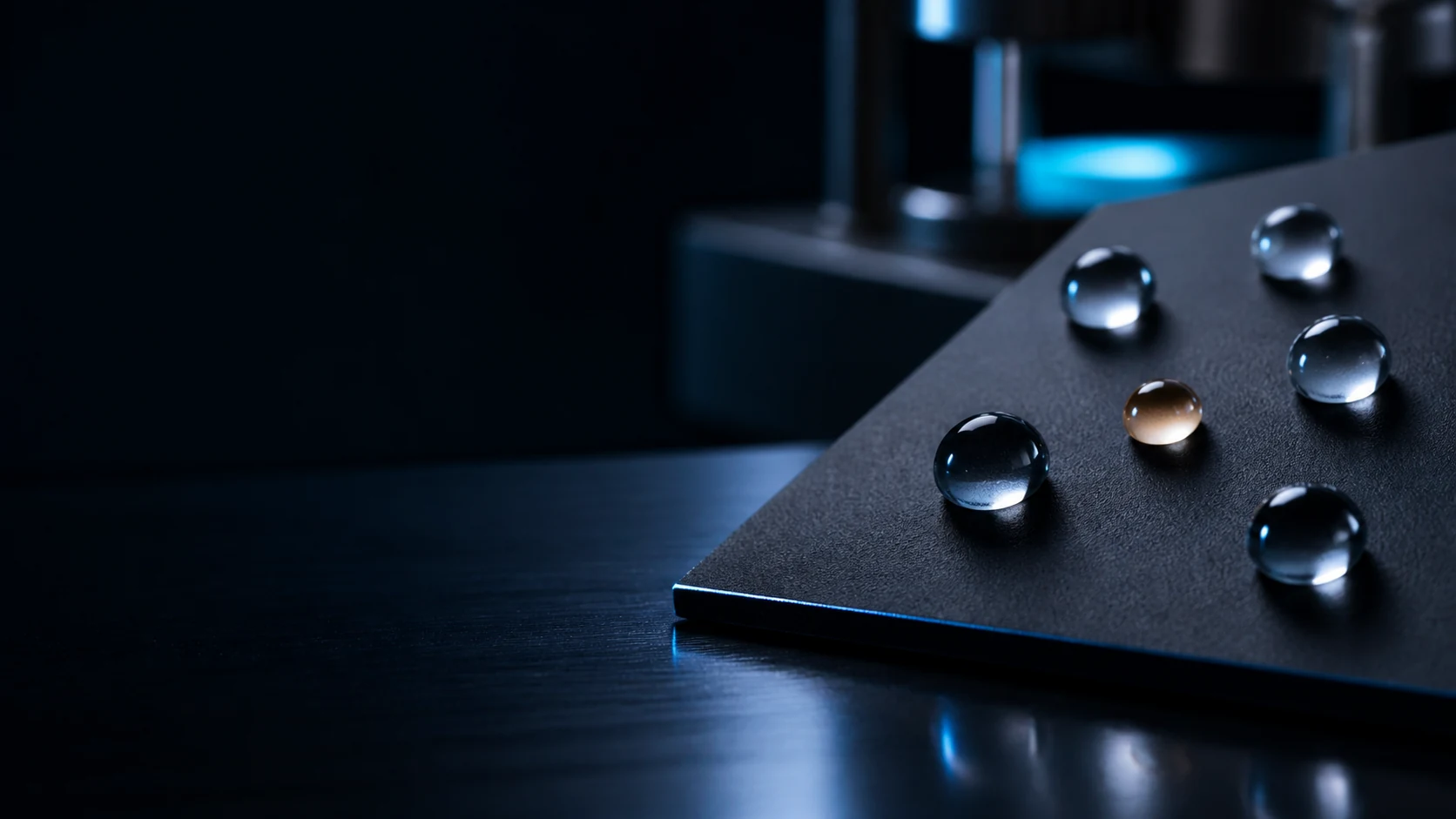
Hydrophilic surfaces promote spreading, while hydrophobic and oleophobic surfaces reduce wetting and residue adhesion.
Antireflection is an optical system
Refractive-index structure, thickness, wavelength and incidence angle control the result.
Antistatic design addresses charge
Electrical pathways and charge decay should be separated from purely cosmetic surface descriptions.
Combined functions need a clear priority
Adding one surface layer can affect adhesion, optics or wetting produced by another, so the dominant requirement should be defined first.
References
- Low-Refractive-Index and Anti-Fingerprint Coating StudyNational Taiwan thesis record 102NCIT5063012
- Transparent Silica/PEG Antifogging CoatingsACS Omega, 2022 · DOI 10.1021/acsomega.1c07293